


Health and Physical Benefits of Dates and Their Most Important Nutrients
Dates are among the most popular traditional foods in the Arab world, known for their sweet taste, nutritional value, and versatility in preparation. The health benefits of dates stem from their dietary fiber content and a range of important minerals and nutrients, so they can be part of a balanced diet when consumed in moderation. They are also convenient to eat and can be served with Arabic coffee or added to certain recipes and desserts.
The Nutritional Value of Dates
Dates contain a variety of nutrients that make them a good choice for a snack. Nutritional values vary depending on the type, size, and ripeness of the dates, but in general, dates provide carbohydrates, natural sugars, and fiber, as well as minerals such as potassium and magnesium. The U.S. Department of Agriculture’s nutrition databases provide detailed information on the nutrients found in various foods, including dates.
The Benefits of Dates for the Digestive System
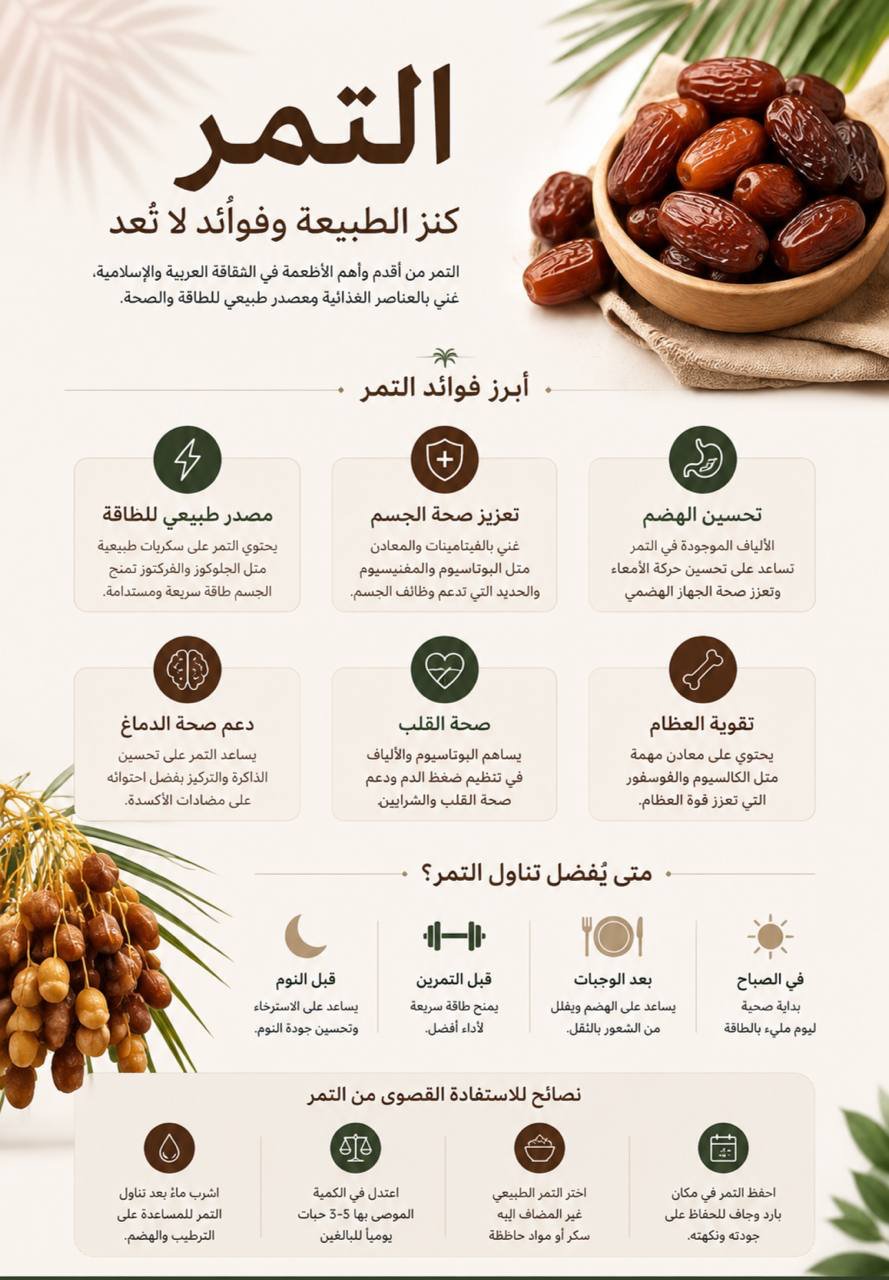
Dietary fiber is an important component of dates and is part of a diet that supports digestive health. Fiber helps regulate digestion, and high-fiber diets are associated with better long-term health.
Therefore, dates can be included in a balanced diet as a natural source of fiber, while making sure to vary your sources of fiber from fruits, vegetables, whole grains, and legumes.
The Benefits of Dates and a Source of Energy
Dates contain carbohydrates and natural sugars, so they can provide a quick source of energy. For this reason, many people enjoy them as a snack throughout the day or before physical activity.
The Benefits of Dates and Potassium
Dates contain potassium, an essential mineral that the body needs for many functions, including supporting muscle and nerve function and maintaining fluid balance. Getting enough potassium as part of a healthy diet is also linked to supporting healthy blood pressure.
Therefore, dates are one dietary option that can help diversify sources of potassium, along with vegetables, fruits, legumes, and other foods rich in this mineral.
Dates and Minerals
The nutritional value of dates is not limited to fiber and potassium; they also contain a variety of other minerals and nutrients. The amounts of these vary depending on the type of date and how it is produced and stored.
Therefore, including dates as part of a varied diet can help increase the variety of nutrient sources in daily meals, without relying on a single type of food.
Dates as a Snack
Dates are easy to eat and require no complicated preparation, so they can be kept on hand as a snack at home or in the office. They can also be eaten on their own or served with coffee or tea.
On the other hand, it can be combined with other foods, such as nuts or yogurt, to create a snack that is more varied in terms of flavor and nutrients.
The Benefits of Dates in the Daily Diet:
Health Benefits of Dates
The benefits of dates are best realized when they are part of a balanced and varied diet. A healthy diet does not rely on a single ingredient but combines fruits, vegetables, whole grains, protein sources, and healthy fats according to an individual’s needs.
The Best Ways to Eat Dates
Dates can be served in various ways, including:
- Eat it as a snack between meals.
- Serve it with Arabic coffee.
- Serve it with tea.
- Add it to the yogurt.
- Use it in some dessert recipes.
- Mix it with nuts for a varied snack.
Are dates suitable for everyone?
Most people can include dates as part of a balanced diet, but the appropriate amount varies depending on nutritional needs and health status. Since dates contain sugars and carbohydrates, it’s important to pay attention to portion size, especially for those who are monitoring their blood sugar levels or calorie intake.
In cases involving specific health conditions, it is best to follow the advice of your doctor or a nutritionist regarding the appropriate amount.
How to Choose and Store Good Dates
When buying dates, choose those that look good in terms of color, texture, and smell, and make sure the packaging is intact if the product is packaged. It is also best to follow the storage instructions on the product.
In general, storing dates in appropriate conditions—away from excessive heat, humidity, and direct sunlight—helps preserve their quality; be sure to seal the package tightly after use.
Summary
The health benefits of dates make them an excellent dietary choice when included in a balanced diet, as they provide fiber, natural carbohydrates, and protein.
Tasium and a group of
Other nutrients. It is also easy to eat and can be served in many different ways—whether as a snack, with Arabic coffee, or as part of various recipes.
However, moderation remains key to reaping the benefits of dates, especially since they contain natural sugars and calories; therefore, it is best to consume them in moderation.
A balanced and varied diet.
To learn more about premium dates after discovering the nutritional value of dates